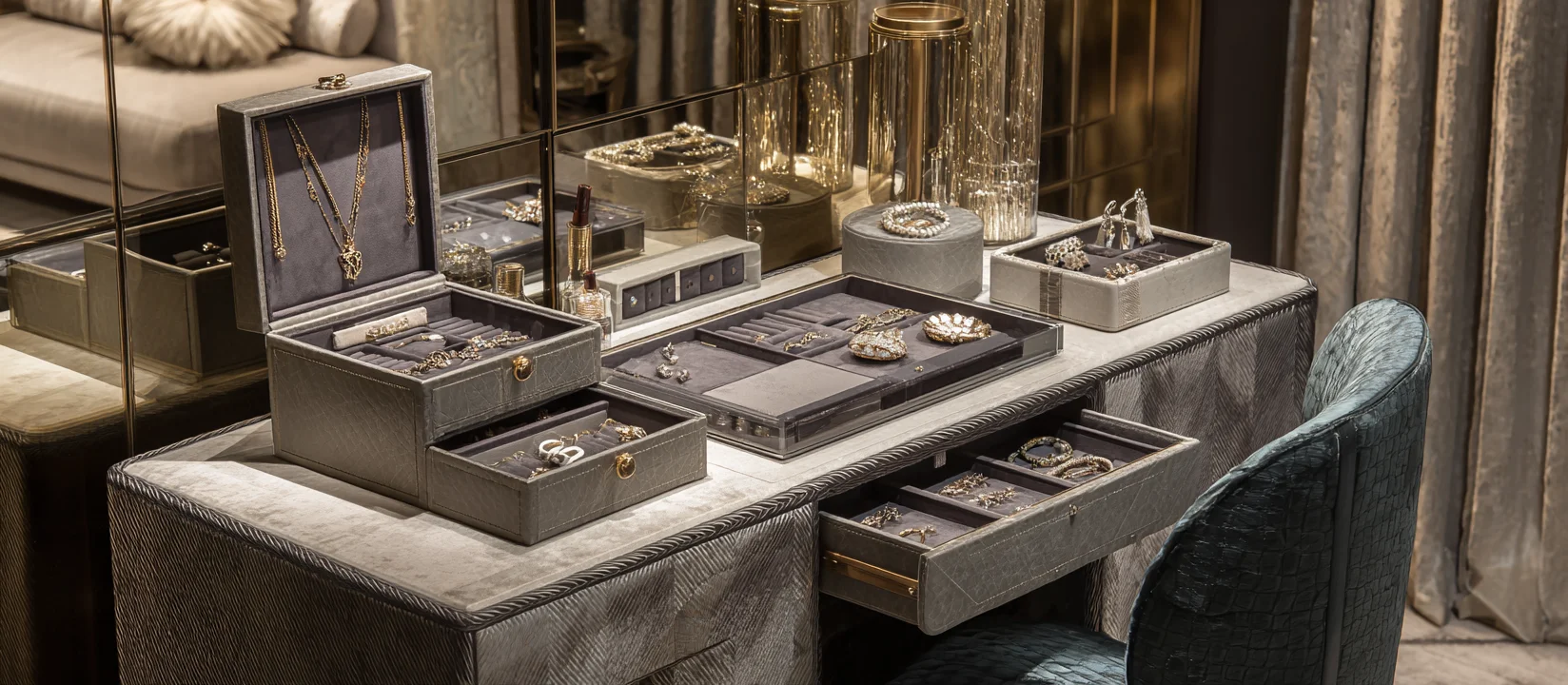
Exploring the Impact of Jewelry Box Materials on Necklace Oxidation
Introduction
Preserving the beauty and longevity of your jewelry is a top priority for anyone who treasures their collection. But did you know that the material of your jewelry box can significantly influence the rate of oxidation for your necklaces? This blog explores how different materials impact the oxidation process and offers insights into choosing the right jewelry box for your prized possessions.
The Science Behind Oxidation
Oxidation occurs when metals react with oxygen, moisture, or sulfur in the air, leading to discoloration or tarnish. Factors such as humidity, temperature, and exposure to certain chemicals can accelerate the process. This makes the choice of storage material crucial for preserving your jewelry's shine.
Comparison of Jewelry Box Materials
1. Wood Jewelry Boxes
- Material: Natural woods like cedar or mahogany
- Effect on Oxidation:
Certain woods (e.g., cedar) absorb moisture, maintaining a drier environment that slows oxidation. However, some woods may release acidic compounds that accelerate tarnishing if not properly treated. - Best for: Silver and gold necklaces with minimal moisture exposure.
2. Velvet-Lined Jewelry Boxes
- Material: Plush velvet or suede linings
- Effect on Oxidation:
The soft lining reduces exposure to air and prevents scratches. High-quality velvet can also wick away moisture, offering additional protection. - Best for: Delicate metals like sterling silver or platinum.
3. Glass and Metal Jewelry Boxes
- Material: Glass panels with metallic frames
- Effect on Oxidation:
Metal frames may release moisture or trap air if not sealed properly, potentially accelerating tarnishing. Glass, while visually appealing, provides no natural moisture control. - Best for: Decorative storage but not ideal for long-term protection.
4. Plastic Jewelry Boxes
- Material: Acrylic or other synthetic plastics
- Effect on Oxidation:
Plastic creates a sealed environment but may trap humidity, especially in humid climates. Lower-quality plastics can emit chemicals that react with metals. - Best for: Costume jewelry rather than fine necklaces.
5. Anti-Tarnish Jewelry Boxes
- Material: Specially treated materials with anti-tarnish linings
- Effect on Oxidation:
These boxes actively neutralize sulfur compounds and maintain low humidity, making them the best choice for slowing oxidation. - Best for: High-value necklaces like gold, silver, and heirloom pieces.
Experiment: Necklace Oxidation in Different Jewelry Boxes
We conducted an experiment to observe the oxidation levels of the same necklace stored in different jewelry boxes over three months.
Results:
- Anti-Tarnish Box: No visible tarnish, with the necklace retaining its original shine.
- Wood Box: Slight discoloration due to natural acids in untreated wood.
- Velvet-Lined Box: Minimal tarnish, with good protection from moisture.
- Glass Box: Noticeable tarnish due to trapped humidity.
- Plastic Box: Moderate tarnish, exacerbated by fluctuating humidity.
How to Choose the Right Jewelry Box
To minimize oxidation:
- Prioritize anti-tarnish features: Look for boxes with treated linings.
- Keep humidity in check: Add silica gel packets or activated charcoal.
- Avoid reactive materials: Steer clear of untreated wood or low-quality plastics.
- Seal it properly: Choose boxes with tight-fitting lids to limit air exposure.
Conclusion
The material of your jewelry box plays a crucial role in preventing oxidation and preserving your necklaces' beauty. Whether you opt for anti-tarnish solutions or carefully choose velvet-lined boxes, understanding the impact of storage materials can save your jewelry from unwanted tarnish.
Take control of your jewelry care today by investing in the right storage solution. Your necklaces deserve nothing less than optimal protection!
How to Choose the Perfect Jewelry Box for Your Collection
Elegant Decorative Tray for Modern Living