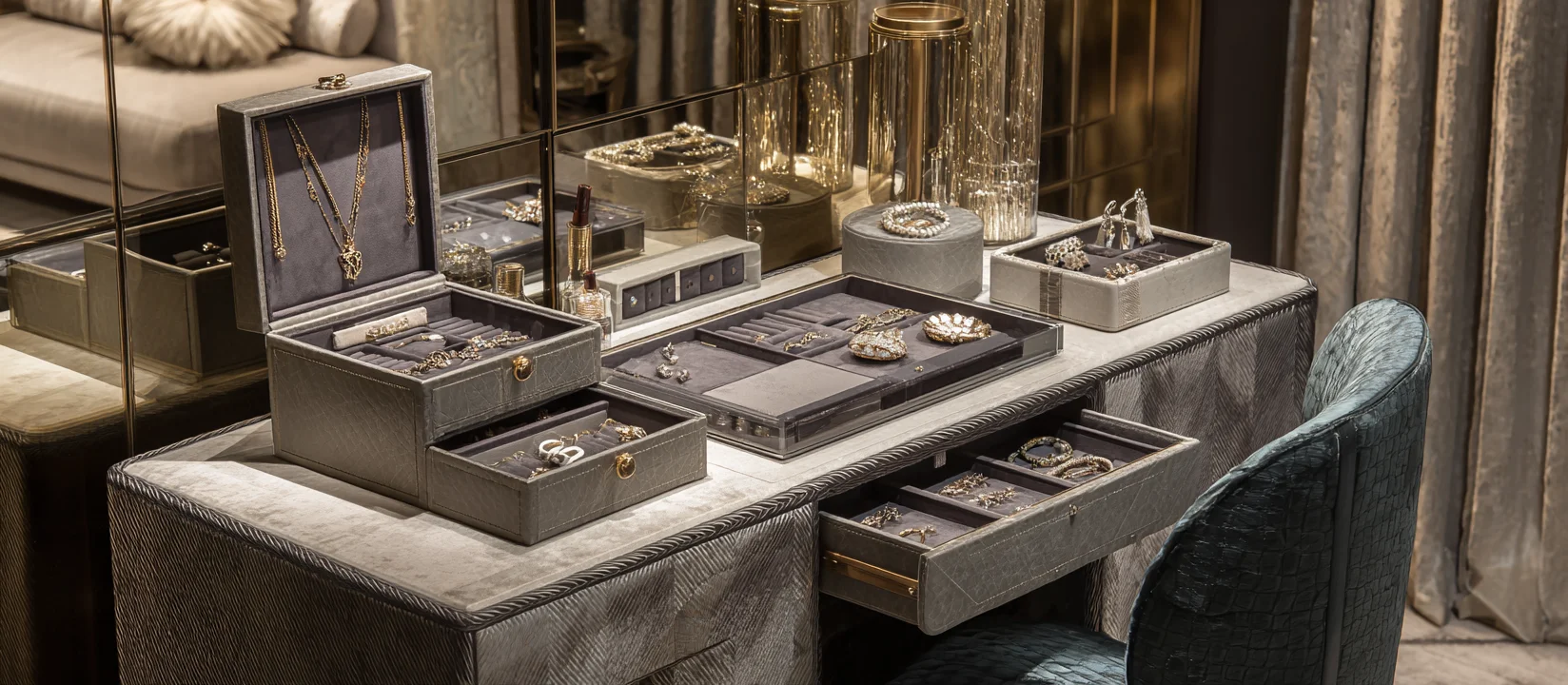
Understanding the Basics of Buying and Making Jewelry Boxes

Welcome to the world of jewelry retail! As you embark on this exciting journey, you'll quickly discover that even seemingly simple items like jewelry boxes come with their own set of industry-specific terms. For newcomers interested in both purchasing and potentially making jewelry boxes, navigating this terminology can sometimes feel overwhelming. That's why we've created this beginner-friendly glossary of common jewelry box terms to help you understand the jargon and the fundamental concepts behind jewelry box construction, making your wholesale purchasing experience smoother and more informed.
Understanding these terms will empower you to communicate more effectively with suppliers, better grasp product descriptions, and ultimately choose the perfect packaging to showcase your precious jewelry. Additionally, this knowledge will provide a foundational understanding if you ever consider making jewelry boxes yourself or collaborating on custom designs. Let's dive in!
A Beginner's Glossary of Jewelry Box Terms (Essential for Buying and Understanding the Process of Making Jewelry Boxes):
- Blister Pack Insert : A clear plastic insert that is molded to the specific shape of a piece of jewelry. It securely holds the item in place and often provides a protective layer. Understanding how these are made is key if you're making jewelry boxes with custom inserts.
- Cardstock : A thick, sturdy type of paper that is commonly used as the primary material for creating jewelry boxes. It offers a good balance of durability and printability, making it a popular choice when making jewelry boxes.
- Closure Type : Refers to the mechanism used to secure the jewelry box closed. Common types include magnetic closures, snap closures, ribbon ties, and hinged lids with clasps – all important considerations when making jewelry boxes.
- Die-Cutting : A manufacturing process that uses a specialized tool (a die) to cut specific shapes and designs out of materials like cardstock or foam. This is a fundamental technique used in making jewelry boxes for creating intricate box shapes and custom insert designs.
- Flocking : The process of applying short, fine fibers (often rayon or nylon) to a surface using an adhesive. This creates a soft, velvet-like texture commonly found on the interior of jewelry boxes to protect delicate pieces, a finishing touch often applied when making jewelry boxes.
- Hinge : A mechanical joint that allows the lid of a jewelry box to pivot open and closed. Hinges can be made of metal or integrated into the box's material (e.g., a living hinge in plastic), crucial components when making jewelry boxes with a lid.
- Hot Stamping : A decorative printing technique where a metallic foil (gold, silver, etc.) is applied to the surface of the box using heat and pressure. This creates a shiny, premium look often used for logos or branding when making jewelry boxes with customized elements.
- Lamination : The process of applying a thin layer of plastic film to the surface of a jewelry box (usually cardstock). Lamination provides protection against scratches, moisture, and wear, and can also create different finishes like glossy or matte, a common step in making jewelry boxes for enhanced durability and aesthetics.
- Lining : The material used on the inside of a jewelry box. This is often a soft material like velvet, satin, foam, or microfiber, designed to cushion and protect the jewelry, a key element to consider when making jewelry boxes.
- MDF (Medium-Density Fiberboard) : An engineered wood product made by breaking down hardwood or softwood residuals into wood fibers, often used for more substantial and rigid jewelry boxes, especially when making jewelry boxes requiring a strong structure.
- Outer Shell : The exterior material of the jewelry box, which can be cardstock, leatherette, wood, plastic, or other materials – the primary choice when making jewelry boxes.
- PU Leather : A type of synthetic leather made from polyurethane. It offers a leather-like appearance and feel at a more affordable price point, a material option for those making jewelry boxes with a leather look.
- PVC (Polyvinyl Chloride) : A type of plastic commonly used for packaging, including some jewelry boxes or transparent windows, a material consideration when making jewelry boxes with specific functional needs.
- UV Printing : A digital printing method that uses ultraviolet (UV) light to cure the ink instantly. This results in vibrant, durable prints and can be used to create special effects like raised textures, a customization option when making jewelry boxes.
- Window Patching : A feature where a transparent window (usually made of thin plastic or acetate) is incorporated into the box design, allowing the jewelry inside to be seen without opening the box, a design element to consider when making jewelry boxes for visual appeal.

Why Understanding These Terms Matters (Whether You're Buying or Making Jewelry Boxes):
Familiarizing yourself with these common jewelry box terms will significantly benefit your purchasing process. You'll be able to:
- Communicate Effectively: Clearly articulate your needs and preferences to suppliers or even when discussing designs for making jewelry boxes.
- Understand Product Descriptions: Accurately interpret the features and specifications of different jewelry boxes, whether you're buying them wholesale or planning on making jewelry boxes with specific characteristics.
- Make Informed Decisions: Choose the packaging that best suits your jewelry and brand image, and understand the implications of different construction and material choices if you're considering making jewelry boxes.
- Avoid Misunderstandings: Ensure you receive the exact type of jewelry boxes you envision, whether you're ordering in bulk or exploring the process of making jewelry boxes to your own specifications.
Conclusion:
We hope this glossary has provided you with a solid foundation for understanding the terminology used in the world of wholesale jewelry boxes and has also shed light on some of the fundamental aspects involved in making jewelry boxes. Now that you're equipped with this knowledge, feel confident to explore our wide selection of jewelry packaging at [Your Website Name] and find the perfect presentation for your beautiful jewelry collections, or even take the first steps in understanding the art of making jewelry boxes yourself!
Custom Jewelry Displays and Jewelry Box Interiors Enhancing Presentation and Protection
Eco Friendly and Custom Jewelry Boxes Wholesale Sustainable Packaging